How Many Smoke Detectors Do You Need?
A smoke detector is one of the most important tools that you can use to protect yourself and your family. As the name suggests, it will detect smoke or other byproducts caused by a fire and send an immediate signal throughout the entire home. In most cases, you’ll be able to hear the noise it generates regardless of where you are in the house. However, this assumes that smoke can be detected at all, and to improve your chances of detection, you should have multiple detectors installed correctly in your home.
Have at Least One Smoke Detector on Each Floor
Ideally, you’ll have smoke detectors on every level of the house including the basement. Therefore, if you have a ranch with a basement, you’ll have two detectors in your home. If you have a two-story house, you should have at least three detectors on your property. This ensures that smoke can be detected regardless of the source.
Smoke Won’t Always Penetrate Doors
Smoke can’t get through doors, which can be dangerous if you are sleeping in your room at the time a fire starts. Therefore, you might want to add another smoke detector outside of your room and outside of any bedroom currently in use. This can be especially effective if you have children as they will likely sleep with their doors closed.
Consider Adding a Detector Inside of Each Room
In addition to putting a smoke detector outside of each room, you should consider adding one inside of any bedroom currently in use. Doing so gives anyone inside of a burning bedroom a chance to get out before a fire has a chance to spread to the door or to other exits in that space.
This could be the difference between walking out the door to a main exit within the home or being trapped in the room. It could also be the difference between getting out of a window or fire escape before either exit is consumed by flames or is too hot to safely manipulate.
Larger Homes May Need Additional Smoke Detectors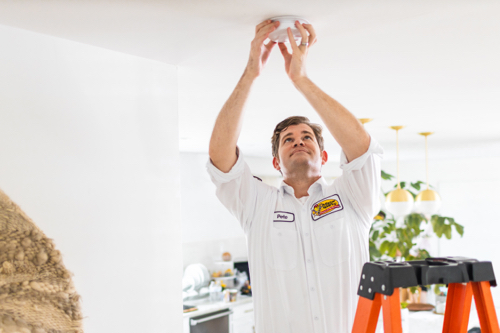
Depending on the size of your home, it may be necessary to add more detectors to areas where people may commonly gather. For example, you might want to add a detector to a library, second kitchen or guest house to make sure that people can get out safely in the event of a fire emergency.
Detectors Should Be Interconnected
It’s likely that a single detector will be loud enough to hear regardless of where you are in the home. For instance, you should be able to hear a smoke detector in the basement even if you are on the top floor. Of course, if you are listening to music, have a door closed or have a window open, you might not notice that anything is amiss.
This is why you should strongly consider connecting your detectors together into a single unit. In this scenario, every smoke alarm will go off regardless of where the smoke currently exists. It allows everyone ample time to recognize that an emergency situation is occurring and to get out quickly.
Make Use of Battery Backup
It doesn’t matter how many batteries you have if they aren’t in proper working order. Even if you have detectors that are hardwired into your home, they should have a battery backup so that they will work in the event of a power outage.
If you use individual units that run on battery power, you should check the battery once a year to ensure that it is in good working order. Many battery units will chirp when the battery is getting low or if the smoke detector is getting close to the end of its useful life.
Consider a Carbon Monoxide Detector
Modern smoke detectors often come equipped with carbon monoxide sensors, which can be ideal in the event of a gas leak. In some cases, a gas leak elevates the risk of a fire as the gas can be highly combustible.
Furthermore, you can’t see or smell carbon monoxide, so you’ll need something to alert you to its presence before it leads to property damage or damage to your health. Maintaining a combination smoke and carbon monoxide detector isn’t much different than maintaining just a smoke detector. In addition, you won’t pay too much more to buy a combination smoke and carbon monoxide detector.
Smoke detector FAQs
How many smoke detectors does my home need?
At minimum, one detector per floor including the basement. A ranch with a basement needs 2; a two-story home needs at least 3. Larger homes with libraries, guest houses, or second kitchens may need even more.
Should I put a detector inside bedrooms?
Yes. Smoke can’t pass through closed doors, so you should have a detector both outside and inside each bedroom in use. This is especially important for children who typically sleep with their doors closed.
Should my detectors be connected to each other?
Strongly recommended. Interconnected detectors trigger every alarm in the home when any single one detects smoke giving everyone maximum warning time, even if a door is closed or music is playing.
Do I need battery backup if my detectors are hardwired?
Yes. Even hardwired detectors should have a battery backup so they remain functional during a power outage. For battery-only units, check and replace batteries at least once a year most units will chirp to signal a low battery.
Do I also need a carbon monoxide detector?
It’s a smart addition. Many modern smoke detectors include a built-in CO sensor. Carbon monoxide is colorless and odorless, making it impossible to detect without a device and a gas leak can also raise the risk of fire. Combination units cost only a little more and require the same maintenance as a standard detector.
If you are in need of wired smoke detectors, give the team at Mister Sparky today. We can also take a look at existing detectors or take other steps to reduce the risk of a fire event in your home. Remember, when you work with Mister Sparky, you won’t have to worry about any malarky. Instead, you’ll get a quality product at an affordable price from a team of qualified professionals.
